Saturday, April 27, 2013

What A Lovely Life!


When I was a potter
Had my kick wheel spinning ‘round
Pulled my clay straight from the ground
Sold pots priced by the pound
And life was good

When I was a potter
With wooden ribs and brushes
Slipped surfaces so luscious
Pushed by exhibition rushes
And life was good

When I was a potter
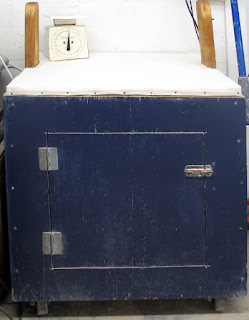
Nights lit up by hot kiln glow
Then waiting for hours and hours to know
Anxious for the opening show
And life was good

When I was a potter
I loved to dance the kiln dance
What appeared by fire and chance?
Leave, return for one more glance
And life was good

When I was a potter


Friday, April 12, 2013

Getting Back To Pricing

I told you I'd get back around to continuing the discussion about pricing.  Here are some more thoughts I've  jotted down since my last post.


Because demand is a slippery thing in the art world -- with personal taste being so prominent in the mix -- the relationship of cost of production to sale price is probably more willy-nilly than in any other marketing endeavor. I'm not exactly whining here -- my pots have sold extremely well and still do. But many of my potter friends can ask for and get 2, 3, even 4 times more of a return on their effort than I can. I marvel at it, really. And sometimes I understand it. Sometimes their work is so exceptional that I see reason for the disparity. I'm not trashing my work -- I'm just acknowledging a difference in kind in theirs. Sometimes I don't get it. And (I believe) art will always be that way.


I do know that sometimes it's a matter of living circumstances. I'll bet King Solomon wasn't the first to point out that the rich get richer and the poor get poorer. Or, as my mother-in-law used to say, "Poor folks have poor ways".


Pottery makes a better second income than it does a primary income. Many of the potters who can demand a higher price for their work can do so because they don't really need to sell it to survive. As such, they can "hold out" for a better price. If they can do that and still remain ambitious with their work (if they love making pots), then they can add to their inventory in such a way that allows them a HUGE bonus when it does sell. And it usually does sell because most of us, in the final analysis, DO know our market.


But if you have bills to pay and there's no other way to pay them than from the sale of your work....buster, you are not going to be holding out for a bigger payday on your precious mug.


Many, like me, made money extremely well for a period of time -- had pots that were just the hottest thing going at times when the market was just ripe for 'em. But even with eyes wide open to the probability that such a windfall was not going to last forever, many of us created a living circumstance that at least in larger part reflected that income level. When that windfall ...er... fell, we were left with overhead that the new reality couldn't maintain


And if you're catching from this post:   This is meant to be encouraging to fellow artists to not lose sight of that goal -- to live within the means that the most normal market circumstances will afford you -- whether by being a second income or by living more simply. 

 I could go on, but I think I'm done for now.

Sunday, March 31, 2013

Spinning

It was just a ¼ pound of clay. I cut it off of the corner of a big lump of clay and absent-mindedly kneaded it in my hand for a minute or two as my mind wandered. Then it began to dawn on me just how great this small ball of clay felt in the hollow of my hand. It was somewhat stiff yet still yielded easily to my thumb. Pleasantly dense with a fine tooth.

I walked over to the wheel and slammed it down on the wheelhead and got the wheel to whirring ‘round. Ah-h-h, this feels really good. Too small to really center it two-handed, but in seconds it virtually shoved itself easily to mid-wheel with nary a wobble.

So I started to pull it.

I’d been making 18” shallow bowls most of the day, so my mind was still set to that shape. First I pulled it up just a mite so’s my outside finger would have some ledge for purchase. Then I gave it a good pull.

The clay just came along and came along and like a song that verse after verse keeps building on a theme, the process drew me in. The rhythm of the wheel speed seemed perfect to grow this huge flattened cone and so I just kept working it. Every time I reached to the center to pull another ring of clay outward, there was more clay to pull. And so on, and so on, and so on, I returned to the root note and played another chorus.

Just a quarter pound, but I passed the 36” diameter after just five minutes of work. The wall of the bowl was getting so thin by 60” in diameter that when I bent low beneath the wheelhead and looked up, I could see the shop lights shining through the bowl wall.

Still, as thin as the wall had become, it showed amazing strength. It didn’t seem inclined to sag. At all. Once I’d pulled it out to 24 feet, I ran to the garage and fetched my bicycle. To my amazement, the clay proved to be so sag-resistant -- even pulled out to that diameter -- that I could ride my bicycle around the rim without distorting the bowl.

I got off the bike and got back to work. I had to see just how far I could throw this ¼ pound of clay.

When the outer rim reached somewhere around Wapakoneta, Ohio, I finally had to face the fact that I was coming close to maxing out the clay in that ¼ pounds. The wall of the bowl was, by then, only at a molecular thickness. And with a few hundred miles of diameter to the rim, I feared that, given the immense speed at the outer rim, centrifugal force was finally going to take its toll on my bowl.

But I had to try one more pull.

You may not believe this – after all, at that wall thickness, it’s almost impossible to see the bowl now – but the bowl now spans all of Indiana, most of Ohio, lower Michigan, and Eastern Illinois. I’m guessing this is probably a record diameter for a wheel-thrown bowl.

Wednesday, March 27, 2013

The Moon


Keep your fingers crossed for me. Pray if you're the type. If I could score this particular job in the industrial park (as some of you know, despite appearances to the contrary, my house and shop are in an industrial park) I could save the pottery as a part time endeavor until I can navigate my way out of the rough seas.


The moon is out tonight.

I know it is. It’s part of my kiln-checking ritual. On my way from shop to kiln building, I look up through the winter branches of my shop’s maple umbrella to check.

It’s there.

But even if I hadn’t checked, I’d have known. I didn’t get my back door closed in time. He followed me into the shop.

He’s been good company these past four hours. He and I relate.

Like the moon’s light I’ll shine
Many a time
But like the sun’s?
Maybe once

Bill taught Karl taught Doug taught me. And somebody before Bill taught him. Reflected light passed down, even if but the smallest crescent is evident. And there’s Richard and Tim and Jim and Mike and Michael and John a whole host of other lights reflecting my way. You see them too when you look at my pots.

Like the moon’s light I may shine
Many a time
But like the sun’s?
Maybe once

And then there’re the women potters whom I don’t know on a first name basis, but whose work inspires me even more. Ms Shankin, Ms Hamlyn, Ms Jefferson, Ms Davis-Woodard.

Like the moon’s light.

It’s 1964
It’s the folded-down back seat of the ’61 Ford Falcon
Jackie and I are laying on our backs and looking out the back window as our family makes its way up to Canada for summer vacation.
Geoff and Barry are in the middle seat
Little Jimmy is asleep in the front, his feet in Dad’s lap, his head on mom’s.
And Jackie and I are watching the moon follow us.
It neither passes nor falls back. It just follows.
It flies right through the tree branches as we speed along beneath them.

Oh Mister Moon, Moon, Mister Silvery Moon
Won’t you please shine down on me?

We sing. Mom taught us years ago, and we sing.

Like the moon’s light.

Monday, March 25, 2013

CH-ch-ch-changes

It’s been a long time, huh? 

 I intended to come back and finish that post that contained my best guesses about pricing. Really, I did. I figured, this being winter, I’d have plenty of time to get back around to it. 

 I’ve got lots of pots done in the meantime. Never enough, but lots. 

And I’ve had a number of very flattering emails from folks kind enough to tell me that they read this blog, enjoy it, and wondering whether I’d be continuing with it. I’m honored that anyone would take the time to read my ramblings. Life is busy for everyone these days, and I know that my posts aren’t always quick reads.
Beyond that, I know this Is supposed to be a blog about pottery, but it ends up being full of stories about my dogs, my music, my sports analogies – everything but pottery. Nobody has complained. I may never have attracted many readers, but I attracted an uncommonly kind and encouraging group of readers. 

 But I think the main reason I never returned to the blog is that I knew I was getting pretty near the end of my life as a potter. As such, I couldn’t figure out a way to have much to say about the life I knew I was soon leaving behind.

I’ve tried to keep this blog fun, upbeat, sometimes funny (at least, as funny as I can make it), and an encouragement to the pottery world. It’s a great life we have, this creative life in clay. And though I can’t help but be aware of the discouraging aspects – an academic world that mostly discourages it, a cultural trend away from heirloom thinking, and just the general cussedness of clay, fire, and water that makes the results (AFTER all the hard work) nearly as often devastating as thrilling – I always wanted this blog to be a place where readers could suffer those discouragements, but still come here and read the reasons that make it worth carrying on.

And now, ironically, I find that I cannot.

The immediate plan is to find work. Dar and I will both be looking for work (we have dozens of applications already submitted). The best we can hope for at this point is a full time job at as much over minimum wage as I can find -- and a part time job in addition to that. Dar will also be looking for a part time job and manage the sales of whatever pots we have left in stock. 

As soon as we find the jobs, we will be selling the house and pottery and trying to find a smaller and more efficient place to move into.

I’ll probably have to rent some space to store the pottery equipment in hopes that someday I may return to making pots. I could never again reaccumulate the kind of equipment I’ve amassed over 33 years. 

Realistically, I doubt I’ll ever again make the same work I’ve been making. For one thing, I’m guessing that I’ll probably be looking into firing electric if I ever manage to set up a garage or basement studio. I’ll have lots of new ropes to learn if I ever get back to it – different glazes and clays, marketing that doesn’t involve travel, figuring out how to fire only on weekends or days off – all stuff that thousands of potters deal with every day (there’re probably more non-professional than professional potters). I admire the heck out of weekend and late night potters. I really do. It’s a level of commitment and energy that I’m not sure everyone is capable of. Salute!

I haven’t decided what to do with the blog – whether to carry on and share the adventure of my change of direction, or whether to just leave it up as an archive. 

 Anyway, it’s been a worthwhile venture, this blog. It put me in touch with a whole family of potters whom I would probably never have met otherwise, as they don’t do art fairs. I’ve enjoyed others' blogs as well, and enjoyed the times when the same idea would echo throughout the blogging world -- giving an enjoyable multifaceted view of an issue that could never have been gained any other way.

I’ve got several shows scheduled (all the way through July. October , if I include invitations), and that’s what I’ll be aiming for – make as much as I can at them -- until some job comes through for me -- at which point I’ll cancel the remainder of the schedule and begin the transition. 

Thanks for reading! It’s been a pleasure.

Thursday, November 15, 2012

A Brief Paws


I haven't forgotten the discussion on pricing, and I'll get back to it.  It's really made me do some thinking.  But I'm taking a few days away from the discussion to take care of Moose.  He's had a rough couple of days and we're going to be figuring out how to re-structure our days around his new heart medications.  

I'll continue the pricing discussion soon.  Thanks for the responses so far.

Saturday, November 10, 2012

A Discussion on Pottery Pricing. Part 1 (maybe)

 I got an email from a friend and I think it would make for an interesting blog post.  It's certainly prompted me to get windy again.  That's not always a good thing, but as long as I've written some of my thoughts down, I thought some people might find them as a useful springboard to further discussion and/or thought. 

Here's the email.  My response is what follows.

Hi John,

So you have this 16 inch diameter bowl on Etsy for 92.00. It's beautiful. If it sells, Etsy will get about 6.00 and shipping will cost you about 20.00. Are you just trying to get rid of it, and are willing to take a loss? Would you have been able to sell this bowl for more 5 years ago? Can you make it for 60 something dollars? Just wondering. I think it's an absolutely gorgeous bowl.


 I would never claim to be correct in my marketing strategy, but I could write volumes on it.  I figured out somewhere along the line that MOST potters I knew (exclude those for whom the labor is so intensive as to re-categorize them) were going about their marketing sort of backwards.  Backwards, and with one HUGE economic misconception.

The HUGE economic misconception is that a pot's value is simply what one can sell it for.  In the world of ebay, that may be true.  And in any individual pot's case, it also may be true. 

But most potters operate on the idea of generalized duplication.  Most potters -- even the ones who are more art and less production in nature -- recreate the "same" pieces over and over.  As a matter of business and marketing and pricing structure, the price of such a "piece" isn't what a potter can sell one for.  No, it is what a potter can regularly/always sell one for. 

And to dig a little deeper into the complexities of the situation.....

Pots serve many different functions (I mean from a marketing point of view.  Not "function" as in "functional pottery").  And not all pots are equally cost effective to make, no matter how analytical we might be about clocking the hours spent per piece, the cost of clay, the cost of firing, etc.

Some pots are meant to attract an audience to buy our other work.  This sort of "show" or "exhibition" piece may function as an eye-catcher to draw people into our marketplace to entice them to look at the rest of our work.  As such, these show pieces will necessarily be marked to reflect their function -- not as income staples, but as a sort of cost of advertising (in this case, the "cost" goes in the labor column).  We generally price these higher, such that if we do sell them (not our first intention -- though not our last, either.  It's a pretty arbitrary thing), that sale will make it worth our while.

That's just one of the exceptions to a standard pricing structure.

A second exception might be a loss-leader.  If we find ourselves in a market that requires busy-ness in order to sell well -- as art fairs do -- we may consider a loss-leader an effective tool.  The buyers at art fairs don't go from booth to booth.  They go from crowd to crowd.  It's human nature to allow the crowd to pick our winners for us.  Just look at the obsession with the polls this past election.  Whether true, false, accurate, or un, the pundits were shouting opinions about them at the top of their lungs because they know that success begets success.  And if one can put forth the image of a winner, one is halfway toward being a winner.


That is also true -- maybe even MORE true -- of the internet marketing situation wherein success breeds success because that's precisely how search engines that will bring new customers to your site work.  They are exactly like an art fair attendee.  They go from "crowd to crowd" looking, not for items, but for items that everyone else has already found appealing.

That's a long way of saying that often, if their studio situation allows for it, or their creativity has figured out a way to make it happen, a potter will offer some item more or less at cost because the attraction to business of any kind quite often translates to an attraction to business of every kind.

I could go on and on about that as well.  But suffice it to say, many of us potters just need an introduction to the audience.  Many of us are convinced that "our story" will win those customers for life if we can but get the introductory foot in the door.  That's the charm of the handmade -- we are selling a story.  And that story is of a lifestyle that human nature finds almost irresistible.  Compelling.

Discussions of the exceptions now established, the question still remains, "so what about the non-exceptional pricing structure?"


I've gone on and on for a very long time here.  If there's any interest in my continuing this dialogue toward discussing "non-exceptional" pricing structure, let me know and I will continue on this blog.

jb

Wednesday, October 24, 2012

Tool And Die


I've had these glazing tongs for 35 years now. They aren't made anymore. The ones that look like them, aren't them.

They fit my hand and they work for Dar's smaller hand as well. And every other pair of glazing tongs we've bought to try to replace these tongs didn't work.


It seems funny to think that a tool as rudimentary as this awesome antique pair of dipping tongs could be that important
to the process of glazing.

But they are.


The screw and lock nut arrangement upon which the two arms hinge had loosened to the point of not being able to safely grip a pot without either dropping it....or because of the uncertainty and panic of it potentially falling, gripping tight enough to break through the pot wall.


Being 35 years old, the screw and nut were rusted together. I tried to get them apart. I tried all kinds of stuff to get them apart. Of course, I first tried simply putting a screwdriver in the screwdriver slot, and a wrench on the nut. I am, after all, an optimist.


ha ha ha ha.


Next I tried WD-40 as the situation apparently fell safely within the "Sticks or Squeaks" requirement to call for the stuff.


Nutting doing. (<------I kill me.)


I tried to see if flush cutters would fit under either end -- the screw's head or the nut -- so I could simply cut the old fasteners off and replace them with new.


Still no.


Finally, in desperation I turned, embarrassed, to the tool of shame. First I made sure nobody was looking. Then I reached for them.


The vise grips.


No respectable tool-user resorts to vise grips.


If you ever go to one of "Those Guys" workshops -- you know the ones? ... with the pristine shop with not just the tools hanging neatly in their proper places on pegboard, but outlines (like, if you were to take all the tools off of the pegboard at once, it would look like CSI had just marked up "The Great Tool Massacre") so's you know exactly where each tool is supposed to go when not in use....


....If you went to a shop like that, you'd NEVER see an outline of vise grips. You'd likely find the vise grips hidden away in some distant drawer.


"Those? ...hmmmm. How'd those get in there?". That's what a real tool guy would say if you found vise grips in his workshop.


But there I was with the vice grips on the screw end....clamped as tightly as I could possibly manage....and a wrench fitted nicely on the nut..... I........grunted....umph..
.....arg..........omph (again, this time with an "o" instead of a "u", in case you're keeping score).....turning red-faced....

Still nothing.


I finally had to break down, biff my manhood, and go ask for help.


John White's Tool, Die & Machine Shop is my neighbor. I walked over there and caught John on his way out the door. I shoved the tongs his way and explained the situation.


We went into the machine shop where John proceeded to lock vise grips on the screw end and a wrench on the lock nut. He gave a few turns and, voila, the screw became nutless.


Honestly, what kind of machine shop uses vise grips?

Tuesday, August 28, 2012

That Silver Stuff


I was thinking about IQs just the other day. IQs and my mom's wisdom.

I think most guys my age took an IQ test in school. I know I did. But my mom curiously never told me how I scored on it.

When I was young I believe I flattered myself by thinking that perhaps mom didn't tell me my scores because she didn't want me to get a big head or, worse yet, brag about a high IQ. That's how I flattered my
self.

My friend, Kevin, always puts scratch-off lottery tickets in the birthday cards he gives me. He did that again last week and I stood at the desk and scratched 'em all off -- the glimmer of hope I had in those five un-scratched cards quickly dimming to nothing as I scratched that last bit of silver off the final loser.

Sometime later that day, as my wondering mind is prone to do, I added up 1 and 1 and came up with 4.

It dawned on me that experience has finally taught me that my mother's silence regarding my IQ score was like that silver scratch off material. Nobody would ever buy a losing card if that silver stuff didn't cover it. And I might not have pursued my passions with such abandon had I known how little was my likelihood of succeeding at them.

Wise mom.

Wednesday, August 8, 2012

It's Tempting


I grabbed Fate and shook his scrawny little neck
And rattled the teeth in his know-it-all head
He cried “you can’t DO this to me you powerless brat!”

I stared that destiny down.  I had him in check
 And just as wryly as I could muster, said:
“What you just said? ….I knew you were going to say that.”
.
.
.
.

Thursday, June 28, 2012

The Effortless Custody of Automatism


“….it missed by this much”, he said.  And to emphasize just how tiny and insignificant “this much” was, he thrust out his hand, holding his finger and thumb a scant quarter-inch apart.

Yeah, what of significance could possibly fit between fingers so closely spaced?

More than 100,000 pots.

Knowing the distance between two fingers – and how to set and hold them there –is perhaps the central skill to being a potter.  It’s not a “squeeze”.   It’s a set-and-hold.  And learning the feel of that distance and being capable of holding it -- whether thumbs may touch over a short wall for reference….or the fingers are completely separated and working on either side of a very tall wall that reaches to the elbow and beyond – that’s what a potter needs to learn to make a good, even-walled pot.  It’s what a potter needs to know to make a pot light enough for function, but heavy enough for a lifetime of use and abuse.

When that skill became second nature to me, I found that my mind would venture off from that starting point – that focus on two fingers – to beyond.  What starts with a slam of clay on wheelhead and a whirring motor, a few seconds worth of slip-slap-center ….  fingers assuming their positions in that set-and-hold, soon (and inevitably) leads to my focus slipping right between those fingers along  with the clay…and wandering off.

Some of my most creative moments happen while I’m at my wheel, my fingers set on spinning clay.  With what has become an automatic focus on my fingers, my imagination is freed.  Now not only do I create the pot presently on the wheel….I contemplate the next, and the next.  I imagine new ideas, new pots.  My imagination becomes as malleable as the clay I’m forming.  I write essays and poetry (yes, at some point I have to wipe slip from my hands and type those thoughts out).  I dream my best, most fruitful dreams with my fingers set “this much” apart.

Yeah, what of significance could possibly fit between fingers so closely spaced?

This potter’s life.